On “The Book of Blessings”
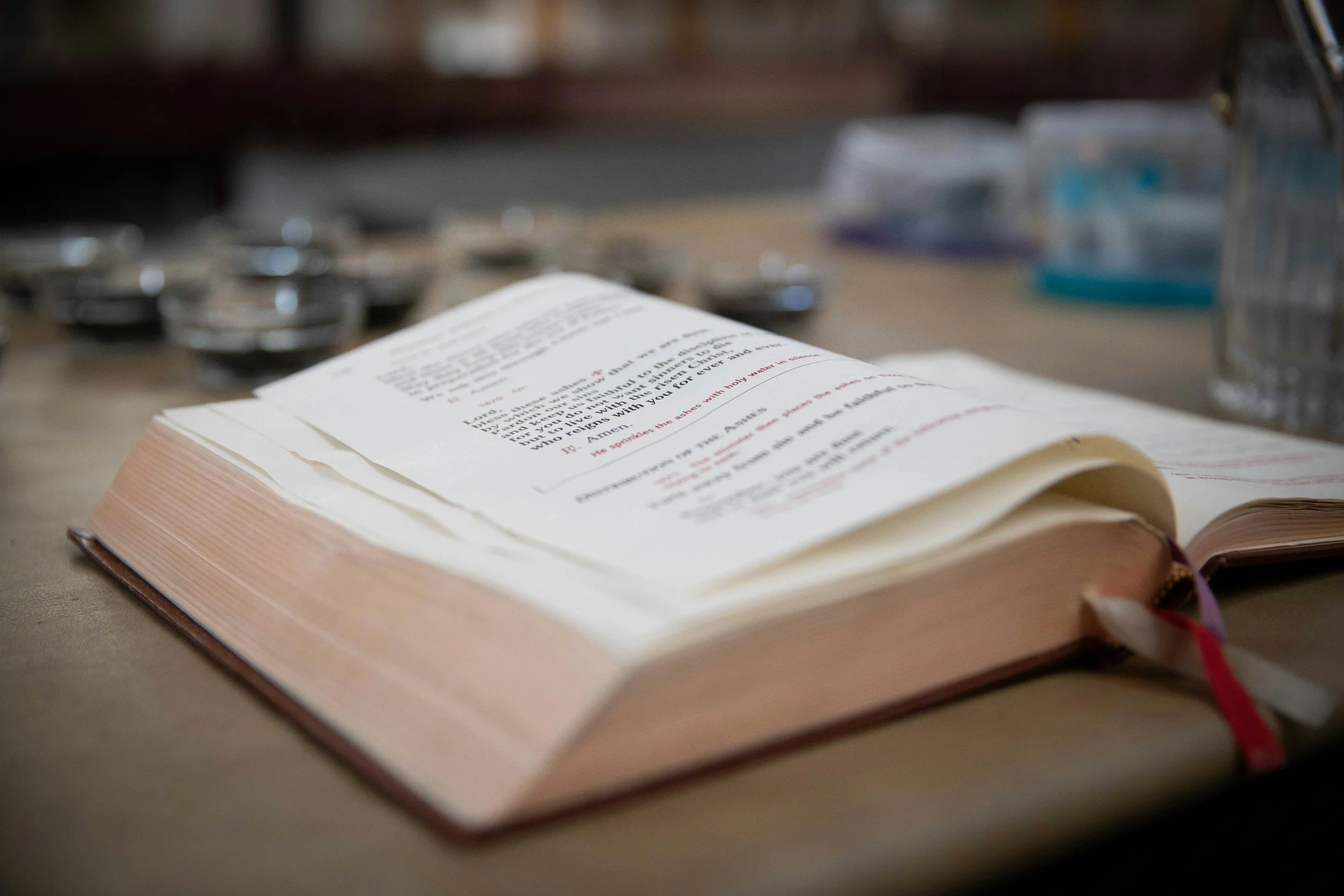
[This essay “A Blessing in Disguise? On the Theology Underpinning the 1984 Book of Blessings and the Roman Missal” was originally submitted as an assignment for a course in liturgical theology at the University of Notre Dame.]
Introduction
The Second Vatican Council’s call for the revision of the liturgical books[1] resulted in the re-promulgation of a significantly revised and expanded section of the existing Roman Ritual[2] as a standalone volume called the Book of Blessings.[3] In light of the broader theological trends of the mid-20th century, this new Book of Blessings draws upon contemporary developments in the fields of biblical studies, sacramental theology, and liturgical theology in order to advance particular notions not only about who may impart a blessing,[4] but even about what a blessing is.[5] In this brief paper, I am to explicate the theological ideas underpinning the changes made between the Roman Ritual and the Book of Blessings, and then to apply these theological principles in an analysis of the various options given for the blessings of objects[6] in the present edition of the Roman Missal.[7]
“Pray, Sir, Give the Blessing”: Theological Desiderata in the New Book of Blessings
The Roman Ritual—first promulgated by Pope Paul V in 1614 with only 29 blessing prayers—had, over the course of the intervening centuries, accrued blessings for many more persons, places, and things, such that the number of prayers in its final 1952 edition had swelled all the way to 179![8] Critics of the Roman Ritual noted that the prayers varied widely in origin and quality,[9] and the fathers of the Second Vatican Council desired that in producing a more homogeneous revised edition of the Roman Ritual, “the primary principle [be]…enabling the faithful to participate intelligently, actively, and easily.”[10] This they hoped to accomplish, for example, by offering books of blessings in vernacular tongues, as well as by incorporating a “liturgy of the word” into the rites when appropriate.[11]
However, other proposed changes were more divisive among the council fathers, such as the provision that “qualified lay persons” might also be capacitated to administer certain blessings at the discretion of the local ordinary (e.g. the diocesan bishop).[12] The Roman Ritual reserved all of its blessings to clerics (if not always to priests or bishops, at least to those in in minor orders),[13] but some of the council fathers wanted to see faculties given to lay persons (think, for example, of lay catechists in far-lung village missions) to offer officially-sanctioned blessings as well. While this proviso did eventually make it into the final text of Sacrosanctum concilium, it was not without the opposition of a strong minority of bishops who were worried about whether or to what extent the capacity to impart a blessing is tied to the sacrament of orders.[14], [15] Despite such misgivings expressed by the council fathers (and, later, by other members of the then-Sacred Congregation for the Sacraments and Divine Worship as well[16]), the working group eventually charged with the composition of the new Book of Blessings was told by a senior official that theirs was in fact the area in which “the most radical revision and new adaptation will be needed”![17]
“Who’s On First, What’s on Second”: The Disagreement Deepens
Even more fundamental, though, than the question of who may bless something—an important point which I will have to set aside for the rest of this paper, since my analysis of the Roman Missal below presumes that the person doing the blessing is the priest-celebrant[18]—is the question of what a blessing is, and this is another instance in which tensions sprang up even among those men who were entrusted with the creation of the new text.
The working group drafting the new Book of Blessings was headed by the French Dominican liturgical theologian Father Pierre-Marie Gy. Spurred on (we might suppose) by the injunction to bring about “radical revision and new adaptation,” and seeking to draw on quintessential ressourcement biblical theology and evidence from the patristic era, Gy was unafraid to chart a new course for the Book of Blessings, despite the centuries of early modern tradition codified in the Roman Ritual.
In the first place, it is important to note a distinction between two types of blessing, each of which appear in both the Roman Ritual and the Book of Blessings. One kind of blessing is called a constitutive[19] blessing, and the other is called an invocative[20] blessing. Constitutive blessings consecrate a person, place, or object to the service of God or to divine worship; examples include the blessing of an abbot/abbess, or the blessing of the paten and chalice. Such blessings have almost always been performed by priests or bishops, going back all the way to the primordial biblical priest Melchizedek. [21] Invocative blessings, on the other hand, do not set apart the person, place, or object (and therefore are less clearly tied to the power of orders), but instead implore from God an increase in some good quality (faith, health, virtue, etc.) in accord with the fervor of the recipient and (of course) the will of God.[22]
Wishing to create a sharper distinction between constitutive and invocative blessings, Gy articulated a novel principle that would have a tremendous impact on the revision of the future text. Despite noting that the blessings used in the early Church most often fell under the category of constitutive blessings (such as the blessing of holy water, chrism, sacred vessels, etc.), Gy questioned whether it was appropriate to use the verb “to bless” in the case of inanimate objects at all. Fearing that this practice was leading to superstition,[23] he insisted that nearly every blessing in the Book of Blessings—even those of purely material objects—be invoked primarily on persons, rather than imparted on the places or things themselves, essentially turning all of the previously constitutive blessings for material goods into invocative ones.[24]
On account of the fact that places and things are no longer themselves the object of blessing, with only two exceptions[25] the Book of Blessings does not even indicate that the Sign of the Cross be made in these instances. However, in hindsight the Church has reconsidered this practice, and in 2002 the then-Congregation for Divine Worship and the Discipline of the Sacraments issued a decree[26] insisting that a blessing imparted by a cleric from the Book of Blessings must always be accompanied by the Sign of the Cross, regardless of whether this is indicated in the ritual text.[27]
As liturgist Father Uwe Michael Lang, CO notes, “This evident shift [turning constitutive blessings into invocative ones]… is in discontinuity not just with the medieval and more recent tradition, but also with the practice of the ancient Church…[it] does not only concern the lex orandi, or the liturgical shape of blessings, but also the lex credendi, thus raising several questions concerning the theology of blessings.”[28] Similarly, American seminary professor Daniel G. Van Slyke “holds that the revised Roman book of blessings, De benedictionibus in significant ways departs from the distinctions that undergird the Catholic theological and liturgical tradition of blessings.”[29] In order to see what has caused such consternation among liturgists and historians such as these, it is necessary to examine more closely the differing theological assumptions or worldviews which underpin the two texts.
“Praise God from Whom All Blessings Flow”: Two Theologies of Creation
The Roman Ritual operates from a worldview that expresses some pessimism about the created order. “Certainly God created all things good; but we no longer live in the Garden of Eden.”[30] In light of the fact that our world has fallen from grace,[31] and the Scriptural assertion that “the whole world lies in the power of the Evil One,”[32] the Roman Ritual evinces a theology of re-claiming created things for God, or what I will call a theology of setting-apart. Hence, even material objects, according to this view, stand in need of being not only blessed but even of being exorcised first, in order that (to paraphrase the words of the patriarch Joseph), “what Satan intended for evil, God now intends [or re-claims or sets apart] for good.”[33] Thus, the blessings of material objects in the Roman Ritual have a decidedly apotropaic character, in which the material creature being blessed (water, a rosary, oil, etc.)—having been re-claimed by the Church’s minister and set apart for a sacred purpose—now can itself glorify God by serving as a tangible protection from the Evil One.
Drawing on the work of theologians such as Edward Schillebeeckx, OP (1914-2009) and Karl Rahner, SJ (1904-1984),[34] the Book of Blessings operates from a fundamentally different set of theological assumptions, espousing what I will call a theology of existing-goodness.[35] Proponents of this theological worldview find support in passages such as I Timothy 4:4-5, which says: “For everything created by God is good, and nothing is to be rejected if it is received with thanksgiving; for then it is consecrated by the word of God and prayer.”[36] Thus, in contrast to the theology of setting-apart that underlies the Roman Ritual, in the Book of Blessings the prayers “are conceived primarily as acts of thanksgiving and praise of God for the good gifts of his creation. The act of blessing consists above all in the recognition and proclamation of the goodness of created things and of the loving care of their Creator.”[37] It is easy to see how this alternative theological worldview informs Gy’s decision to rescind almost all constitutive blessings of places and things—after all, if creation is already eminently good, what further need is there to set apart some of it for God?
Lang offers the following observation on this fundamental change in the underlying view of creation:
Here a theological shift occurs: whereas for centuries many blessings had a strong apotropaic [protection-from-evil] element, which was expressed in the actual prayers, and blessed objects, above all holy water, were meant for the protection of those who used them against the influence of evil – and indeed of the Evil One – this aspect of blessings was now to be discouraged.[38]
Van Slyke likewise opines that “any view that discounts the influence of evil in favor of an insistence on the goodness of creation can be accused of an optimism that verges on naïveté.”[39] He goes on to say that:
The De benedictionibus promulgated in 1984 is no mere revision of the blessings from the pre-Vatican II Roman Ritual. It is rather a completely different work, which appears to be undergirt by a radically different understanding of the nature of blessing and exorcism, an understanding that is in part characterized by the practical principles of revision set forth by [the working group] and discussed above.[40]
A Theological Analysis of Blessings in the Roman Missal
The current edition of the Roman Missal thus gives two options for the prayers intended to bless the ashes on Ash Wednesday, the palms on Palm Sunday, and the candles on the Feast of the Presentation of the Lord. In each case, one option for the prayer imparts an actual blessing on the objects themselves, while the other option invokes a blessing on the people for whom the material goods in question are intended.[41]
In the blessing of ashes on Ash Wednesday, the first prayer is the invocative one—it asks God, in His kindness, to “pour out the grace of your + blessing on your servants who are marked with these ashes.” No mention is made of blessing the ashes themselves, since this blessing falls under the theology of existing-goodness category, on which view a constitutive blessing of creaturely ash is not only unwanted but unnecessary. The second prayer, coming from the theology of setting-apart tradition, offers a directly constitutive blessing of the ashes when it says “in your kindness be pleased to bless + these ashes, which we intend to receive upon our heads.”[42]
In the blessing of palms on Palm Sunday, it is now the first of the two options that confers the constitutive blessing with the words “sanctify + these branches with your blessing.” The second prayer I will quote in full, because I think that this prayer exists at the very outer limit of what can reasonably be construed as a blessing. The prayer reads:
Increase the faith of those who place their hope in you, O God,
and graciously hear the prayers of those who call on you,
that we, who today hold high these branches
to hail Christ in his triumph,
may bear fruit for you by good works accomplished in him.
Who lives and reigns for ever and ever.[43]
In this second option, not only is the Sign of the Cross is not made, but no form of the verb “to bless” is used anywhere. While I suppose that the petitionary clause “increase the faith” might technically qualify as an invocative blessing under the definition I gave above, this prayer reads more like a collect,[44] and its positioning as a blessing really stretches the concept of what it means for a priest to offer a blessing when he presides at the highest prayer of the Church.[45]
In the blessing of candles on the Feast of the Presentation of the Lord, the first prayer is the constitutive one: “we humbly ask that…you may be pleased to sanctify with your blessing + these candles.” The second, invocative prayer is another instance of an innovative corner case, like the second prayer of blessing for Palm Sunday, which tests the limits of what words or actions are required for a sacerdotal benediction. It reads:
O God, true light, who create light eternal,
spreading it far and wide,
pour, we pray, into the hearts of the faithful
the brilliance of perpetual light,
so that all who are brightened in your holy temple
by the splendor of these candles
may happily reach the light of your glory.
Through Christ our Lord. [46]
Whereas the Palm Sunday invocative prayer at least made mention of one of the theological virtues (“Increase the faith…”), the petition in the invocative prayer for Candlemas is (ironically) even more obscure: “Pour…into the hearts of the faithful the brilliance of perpetual light.” While granting that this is a powerful and beautiful image, it seems that such figurative imagery fully epitomizes the shift that Gy initially steered the working group towards: not only does this prayer not bless the candles themselves, but it invokes upon the people a blessing so abstract as to be almost incomprehensible.
Even in the other prayers of the Roman Missal and the Book of Blessings, when a priest makes the Sign of the Cross and utters the words of a constitutive blessing, the faithful can know that their objects are now blessed. In an invocative blessing as rarified as this last one, are the faithful just supposed to hope (or, worse, to presume?) that God will pour into their hearts the brilliance of perpetual light (whatever that means)? If, as Sacrosanctum concilium and the Book of Blessings says, “a primary criterion is that the faithful are able to participate actively, consciously, and easily,”[47] I wonder if blessings such as these don’t exactly fit the bill.
Conclusion
Having examined not just the texts of blessings but the theological assumptions that undergird them, it is important to recall that that, just as Scripture is “big enough” to hold a nuanced view of the postlapsarian state of the created world that God made (and still makes!) good, the Church is “big enough” to hold both worldviews, the theology of setting-apart and theology of existing-goodness, in her benedictions. At the same time, while maintaining a filial respect for the Church and a desire to see her blessings bestowed to the fullest extent possible, I contend that there must be at least some minimum requirement in order for a blessing to be a blessing—gesturally at least the making of the Sign of the Cross, or verbally at least a petition that explicitly uses some form of the verb “to bless”—lest the concept of a blessing itself become nonsensical. Unfortunately, sacramentals such as blessings have received but little rigorous attention in the history of the life of the Church,[48] and so more work is needed in this area.
[1] See Sacrosanctum concilium §25, 31, 79; hereafter SC.
[2] a.k.a. Rituale Romanum, last typical edition published 1952. As an aside, despite the fracas over legal lacunae in Traditiones custodes and the question of whether it was also meant to outlaw the use of the 1952 Roman Ritual, the current Book of Blessings has always explicitly allowed episcopal conferences “to retain or to adapt blessings belonging to particular rituals or those of the former Roman Ritual” (General Introduction to the Book of Blessings §39c).
[3] a.k.a. De benedictionibus, published 1984.
[4] [4] SC §79 calls for fewer reserved blessings (reserved, e.g., to members of particular religious orders), and even stipulates that lay persons could be deputed to offer certain blessings, as discussed below (see also Lang 36, 40-42).
[5] Lang, Uwe Michael. “Theologies of Blessing: Origins and Characteristics of De benedictionibus (1984).” Antiphon (Mundelein, Ill.) 15, no. 1 (2011): 27–46. https://doi.org/10.1353/atp.2011.0018.
[6] Specifically: the ashes on Ash Wednesday, the palms on Palm Sunday, and the candles on the Feast of the Presentation of the Lord (February 2 a.k.a. Candlemas).
[7] a.k.a. Missale Romanum, amended third typical edition published in Latin in 2008 and in English in 2011.
[8] Van Slyke, Daniel G. “The Order for Blessing Water: Past and Present.” Antiphon (Mundelein, Ill.) 8, no. 2 (2003): 12–23. https://doi.org/10.1353/atp.2003.a940907.
[9] Lang 28-29.
[10] SC §79.
[11] General Introduction to the Book of Blessings §20-21. See also Lang 29.
[12] SC §79.
[13] Lang 41.
[14] Lang 30; see also the portion of the 4th-cetury Apostolic Constitutions cited in Van Slyke, Daniel G. “Toward a Theology of Blessings: Agents and Recipients of Benedictions.” Antiphon (Mundelein, Ill.) 15, no. 1 (2011): 47–60. https://doi.org/10.1353/atp.2011.0019.
[15] As an aside, the Church is still working her way through an analogous question of delegated vs. sacramental authority, though on a much more significant scale, with regard to the power of governance and the exercise of authority by the heads of the Roman dicasteries in light of the 2022 restructuring of the Roman curia according to Praedicate evangelium.
[16] Lang 37.
[17] The presidency of the Consilium for Implementing the Constitution on the Sacred Liturgy, quoted on Lang 31.
[18] Lang 42.
[19] Also sometimes referred to as an imprecatory blessing.
[20] Also sometimes referred to as a deprecatory blessing.
[21] Van Slyke “Toward” 50, 54-59.
[22] See the General Introduction to the Book of Blessings §15 and also Lang 34.
[23] See, e.g., the quote from the group’s working document on Van Slyke “Order” 15.
[24] The General Introduction to the Book of Blessings states that “Blessings on objects and places…are invoked always with a view to the people who use the objects to be blessed and frequent the places to be blessed” (§12). See also Lang 35, 39 and Van Slyke “Order” 15.
[25] Namely, the blessing of religious articles such as medals or crosses (Part IV Chapter 44) and rosaries (Part IV Chapter 45).
[26] Cum exusitato more, Prot. No. 1745/02/L; issued September 14 2002 and available in the Acta apostolica sedis volume 94 (2002) page 684.
[27] Lang 40.
[28] Lang 43 and 45.
[29] Van Slyke “Toward” 48.
[30] Van Slyke “Order” 19.
[31] See Genesis 3, or just look at any news media.
[32] I John 5:19; see also John 12:31, II Corinthians 4:4, Ephesians 2:2, et al.
[33] See Genesis 50:20.
[34] Lang 44; Van Slyke also mentions Otto Semmelroth on “Order” 18.
[35] Expressions of this theological paradigm can be found in the General Introduction to the Book of Blessings; see for example §2, 7, et al. See also Lang 44-45.
[36] Lang 33, Van Slyke “Toward” 52.
[37] Lang 33.
[38] Lang 36, see also 44.
[39] Van Slyke “Order” 19.
[40] Van Slyke “Order” 15.
[41] Lang 39.
[42] Roman Missal, Ash Wednesday Blessing and Distribution of Ashes.
[43] Roman Missal Palm Sunday of the Passion of the Lord §6.
[44] And maybe in an ancient sacramentary it used to be exactly that! I would need to research its provenance further in order to find out.
[45] If a petition for some good counts as a blessing, even absent the Sign of the Cross and the explicit use of the verb “to bless,” then does it count as a blessing if the priest says “I hope you have a nice day” in the announcements at the end of Mass? If not, why not? Just because it’s not written in a liturgical book? Is it the case, then, that absolutely any combination of words can be a blessing as long as a rubrical heading in the Church’s liturgical books labels it as such?
[46] Roman Missal, The Presentation of the Lord, The Blessing of Candles §5.
[47] General Introduction to the Book of Blessings §24b, compare SC §79.
[48] Lang 43-45; Van Slyke “Toward” 47.